What is Hyper3D used for?
Hyper3D's Rodin pipeline turns photos, multiview image sets, or text prompts into animatable 3D assets with WebGPU previews, omni-directional remixes, and credit-based business tiers.

Hyper3D's Rodin pipeline turns photos, multiview image sets, or text prompts into animatable 3D assets with WebGPU previews, omni-directional remixes, and credit-based business tiers.
Note: I have not personally tested and verified all tools listed on printer.tools. Please ensure to do your own research and due diligence before using any tool or service. Printer.tools aims to be a helpful directory of useful tools and resources for the 3d printing community. If you find any issues with a listed resource, please let me know.
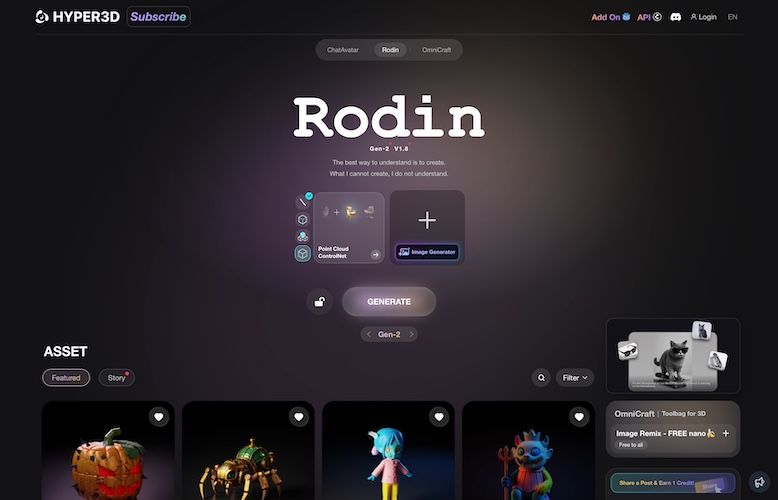
Hyper3D (formerly Rodin AI) delivers a suite of tools for building avatars, props, and full-scene assets from text prompts, multiview image sets, or reference photos. The browser interface leans on WebGPU for real-time previews, while OmniCraft and Remix pipelines help you iterate on materials and lighting before exporting.
Hyper3D outputs rigged meshes and baked texture packs ideal for games, animation, or stylized 3D prints. For printing, download the mesh variant, inspect for thin features, and consider using the baked normals as a guide for painting post-processing detail.
Hyper3D's Rodin pipeline turns photos, multiview image sets, or text prompts into animatable 3D assets with WebGPU previews, omni-directional remixes, and credit-based business tiers.
Hyper3D is listed on printer.tools as: From $24/mo (Creator). Always check the official website for current pricing or plan limits.
Hyper3D is listed for Web.